Re-caulk the tub before it leaks, not after
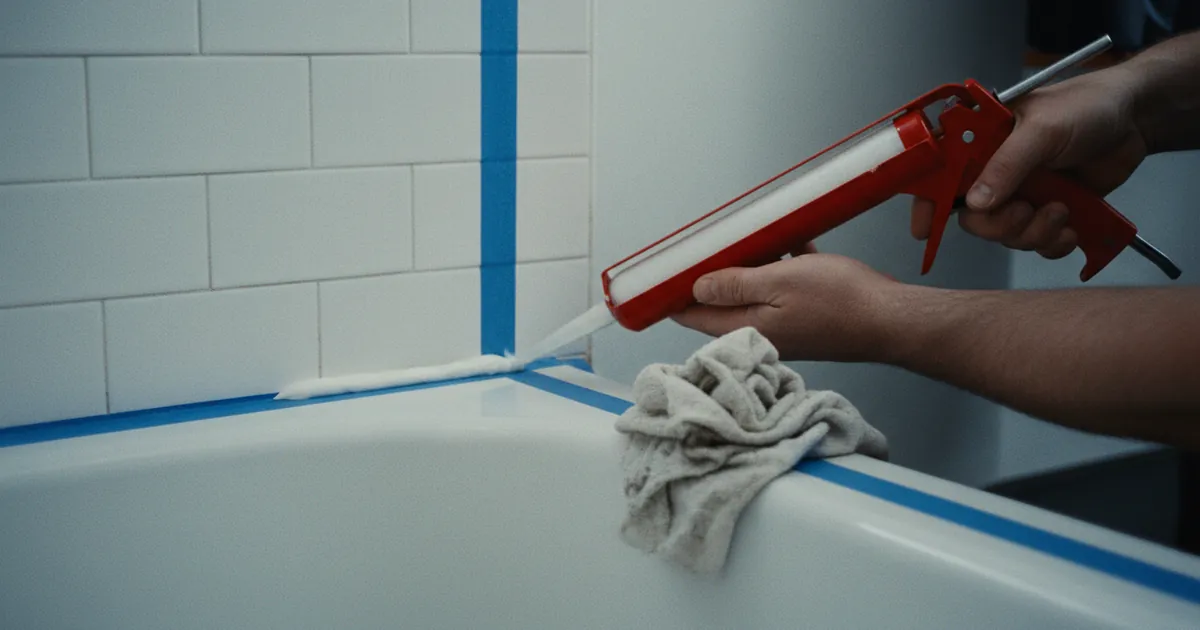
What the caulk is doing
The seam where the tub meets the tile moves — the tub flexes when you stand in it, the wall doesn't. Caulk is there to stay flexible across that gap. When it cracks, pulls away, or goes black underneath, water is getting behind it every shower. You won't see the damage for a year. Then it's a soft wall, a stained ceiling downstairs, or a rotted subfloor.
When to redo it
Any crack you can see. Any gap you can slide a fingernail into. Mold that comes back within a week of cleaning — that's growing behind the caulk, not on it.
Why the prep is the job
Anyone can run a bead of caulk. The reason it fails in six months is what's underneath: old caulk left in the seam, soap film, moisture. The job is scraping every bit of the old bead out, cleaning the seam, letting it dry completely, then taping and running a single smooth bead of the right product for a wet area. It's mostly scraping. The pretty part is the last five minutes.
Keep reading
The bathroom fan runs, but the mirror still fogs
If the fan is on and the mirror still fogs, the fan isn't moving air. Three common reasons, one of which is doing damage you can't see.
A hole in the drywall: what the repair actually involves
Most drywall damage looks worse than it is. Here's what the fix involves and why it's often done on the same visit as something else.