A hole in the drywall: what the repair actually involves
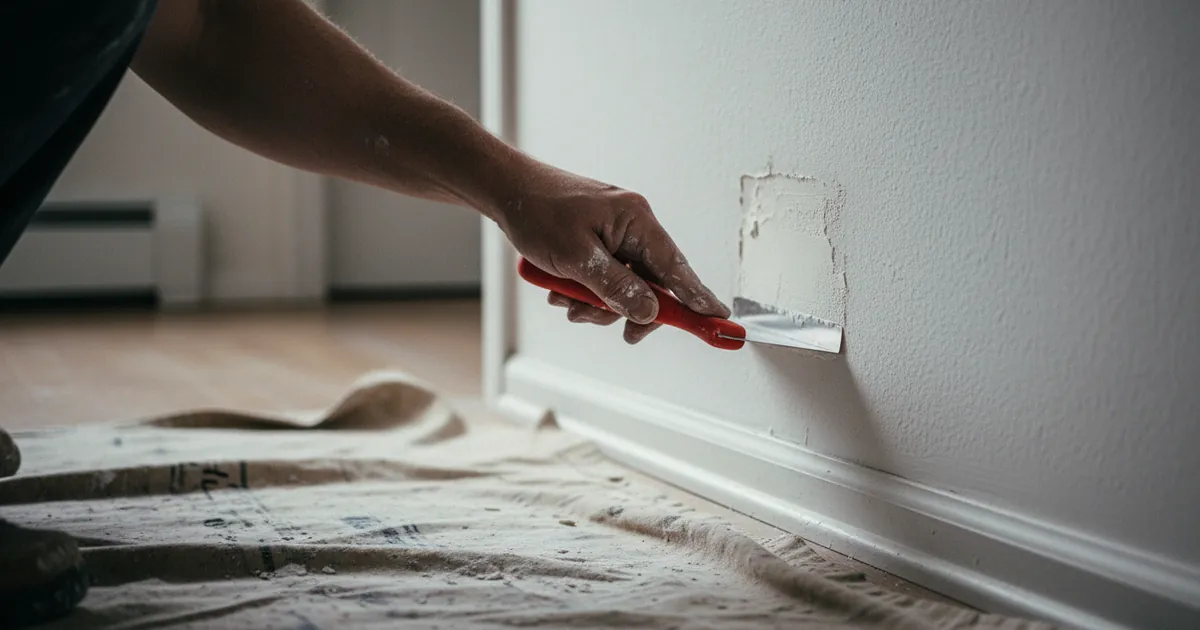
The three kinds of holes
Almost every drywall call is one of three things. A doorknob that went through the wall. A water stain from a leak that's already been fixed. Or a crack running diagonally from the corner of a door frame.
They look different but the repair is the same idea: cut back to solid material, put in a patch or a piece of mesh, and build the surface back up in thin coats so it doesn't show.
How long it takes
The work is quick. The waiting isn't. Joint compound has to dry between coats, so a proper patch is usually two visits or one visit with a long lunch in between. If you've been told a hole can be "done in an hour," ask what it's going to look like when the paint goes on.
What I need from you
Know where the leak was, if there was one, and whether it's fixed. Patching over a live leak is throwing money away. And if you have the paint the room was done in, put it out — a patch that's painted with the original can disappears. One that's painted with "close enough" doesn't.
When it can wait
A cosmetic crack can wait for the next time I'm there for something else. A soft spot, a stain that's getting bigger, or a bulge shouldn't — that's water, and water doesn't stop on its own.
Keep reading
What "free estimate" actually means when I say it
Free estimate is a phrase everyone uses. Here's exactly what it means on my side — what I look at, what I write down, and what you're agreeing to.
Your garbage disposal is humming but not spinning
A humming disposal is jammed, not broken. Two things to try before you call — and the point at which a new unit is cheaper than another repair.