A soft spot on the deck is telling you something
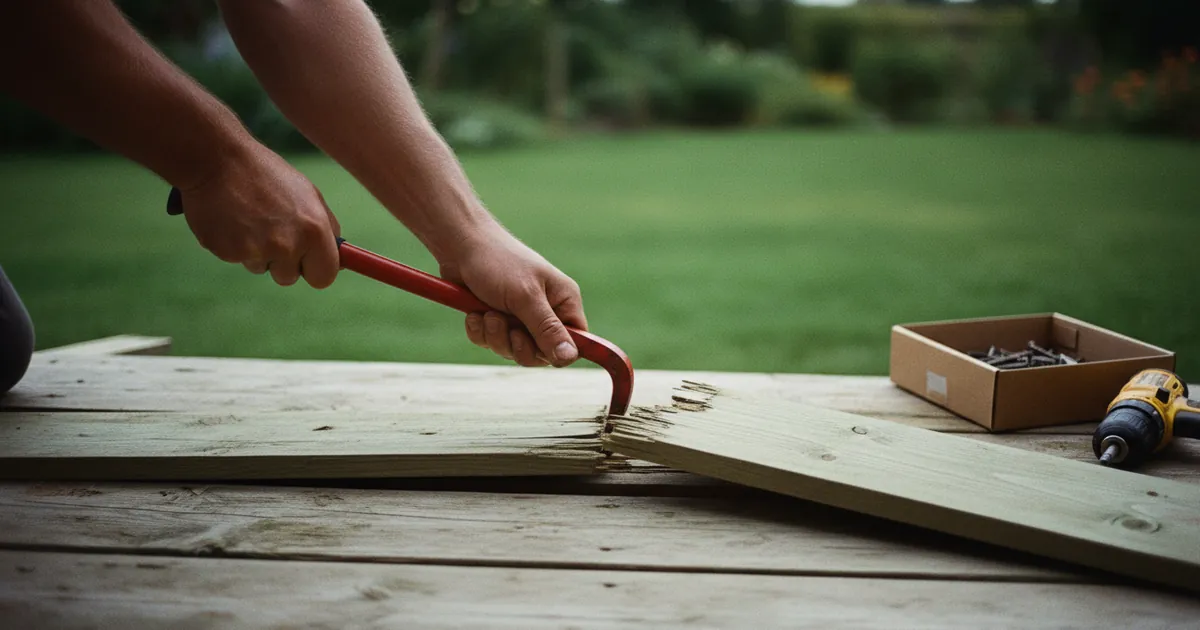
Board or joist
Press on the soft spot. If it gives right there and is firm a foot to either side, it's one board. If the whole area moves together, or you can see the boards dipping in a line, the joist underneath it is going.
One bad board is a quick swap. A bad joist means getting underneath — sistering a new piece alongside the old one, or replacing it if the ends have rotted at the ledger or the beam.
Where decks rot first
At the house. The ledger board — the piece bolted to the house — collects water behind it if the flashing was never done or has failed, and it rots where nobody can see. That's the piece that matters most, because it's the one holding the deck to the house.
Then the stair stringers, then any post that sits on the ground or in concrete instead of on a bracket.
The honest answer on old decks
If the boards are soft in several places and the deck is old enough that the framing is the same age, a spot repair is putting a good board on a bad frame. I'll tell you if that's what you've got. Sometimes the right call is a few boards now and a plan for the rest; sometimes it's a rebuild and there's no point pretending otherwise.
Keep reading
Clean the gutters before the leaves, not after
Gutters are the cheapest thing on the house to maintain and the most expensive to ignore. When to do it and what to check while the ladder's out.
A hole in the drywall: what the repair actually involves
Most drywall damage looks worse than it is. Here's what the fix involves and why it's often done on the same visit as something else.